Commercial Moves in Newbury Park
Commercial moves in Newbury Park require careful planning, practical experience, and a local team that understands how to keep business disruption to a minimum. Whether you are relocating a small office, moving a retail unit, upgrading a workshop, or coordinating a multi-floor business move, the process needs to be organised around your trading hours, equipment, access points, and staff availability. In a busy part of East London, a well-run move can save valuable time, reduce stress, and help your business get back to normal faster.
Newbury Park is home to a mix of business types and property layouts, from offices near main transport routes to commercial spaces tucked into mixed-use buildings, high streets, and business premises close to residential streets. That variety matters. A successful office relocation or business move in Newbury Park often depends on knowing where loading is possible, how to manage parking, and how to work efficiently around other local road users, neighbouring premises, and time-sensitive schedules.
If you are planning a business relocation, internal move, or complete premises transfer, this page explains what is included, how the service works, what to prepare, and why a local commercial removals team can make all the difference. Request a free quote when you are ready, or read on to see how the process is typically handled from start to finish.
Why Commercial Moves in Newbury Park Need Local Knowledge
Newbury Park has a practical mix of suburban streets, busy commuter routes, and commercial properties that can create different challenges depending on the time of day and the type of building. A move that might look straightforward on paper can become difficult if the vehicle cannot park close enough, if lift access is limited, or if your building has narrow corridors, shared entrances, or strict access rules. That is why local knowledge matters so much for commercial removals in Newbury Park.
A team familiar with the area will normally factor in route planning, building access, nearby congestion, and timing. This is especially helpful for offices with staff still working on site, retail units needing to protect stock, and businesses moving sensitive equipment. From small office move projects to larger commercial relocation jobs, the aim is always the same: keep your business running as smoothly as possible.
Local relevance also matters for parking and loading. Commercial streets and mixed residential areas can have limited stopping space, shared bays, or restrictions that affect the schedule. A move team experienced in Newbury Park can plan around these conditions, reducing wasted time and making the move more predictable for everyone involved.

Who Our Commercial Moving Service Is Designed For
Commercial moves are not one-size-fits-all. Different organisations need different levels of support, and the right service should be flexible enough to match your workspace, deadlines, and equipment. In Newbury Park, commercial customers often include:
- Small offices and professional practices
- Retail units and shop premises
- Clinics, studios, and consultation rooms
- Warehouses and storage-based businesses
- Light industrial and trade premises
- Shared offices and serviced workspaces
- Hospitality and customer-facing businesses
Each type of business has different moving needs. A professional office relocation may focus on IT equipment, filing systems, desks, and confidential documents. A retail move might need stock handling, shelving, display items, and careful timing to avoid trading interruption. An industrial or warehouse move may involve heavier items, palletised goods, machinery parts, or large volumes of boxes.
Whether you are moving a single unit or several departments, the most useful commercial moving support is the kind that can adapt to your premises rather than forcing your team to fit into a rigid process.
Common commercial move scenarios in the area
Businesses in and around Newbury Park often book moves when they are:
- Expanding into a larger office
- Downsizing to a more efficient space
- Reconfiguring a current workplace
- Moving after a lease change
- Opening a second location
- Relocating stock or archives to storage

What Is Included in a Commercial Move
A good business moving service should do more than simply transport items from one building to another. It should support the full relocation process, helping you reduce downtime and keep important assets protected along the way. While every move can be tailored, a typical commercial move in Newbury Park may include the following services:
- Pre-move planning and scheduling
- Site access review and move-day coordination
- Packing support for equipment, files, and office contents
- Furniture dismantling and reassembly where required
- Safe handling of desks, chairs, cabinets, and storage units
- Transport of boxed items, IT equipment, and specialist items
- Placement of furniture and equipment at the new premises
- Optional help with internal office rearrangements
Depending on your requirements, you may also want support with labelling systems, room-by-room organisation, or phased moving plans. These details make a big difference in a workplace where staff need to find their equipment quickly and get back to work with minimal confusion.
Clear planning is one of the biggest benefits of using an experienced local removals team. It means the move is not just physically possible, but also practical for your team, your customers, and your operating hours.
How a structured commercial relocation helps
Structured relocation planning can help you:
- Reduce downtime during the move
- Protect valuable or fragile equipment
- Improve the speed of unpacking and setup
- Keep departments organised
- Minimise disruption to clients and staff

How the Process Usually Works
Commercial moves in Newbury Park are generally easier when the process is broken into clear stages. That way, your business can prepare properly and avoid last-minute problems on moving day. While every removal company may work a little differently, the overall process usually follows a sensible sequence.
1. Initial enquiry and move details
Start by sharing the basics: your current location, your new premises, the number of workstations or items involved, the type of business, and the timing you are aiming for. If you have awkward access, fragile equipment, or time restrictions, mention those early. This helps the team understand the scale of the project.
2. Survey or assessment
For business relocations, an assessment is often useful so the removal team can see the access conditions, estimate loading requirements, and identify any items that need special handling. A good assessment helps avoid surprises and keeps the plan realistic.
3. Planning the moving day
This stage usually covers timing, parking, route planning, packing requirements, labels, and any equipment needed for lifting or moving. If your business needs to move out of hours or in phases, that can often be arranged in advance.
4. Move day execution
On the day, the team arrives with the right vehicle and equipment, carefully loads the items, and transports them to the new location. Items are then placed where they belong, helping your staff settle in faster.
5. Final positioning and checks
Depending on the service agreed, the final stage can include placing desks and office furniture, checking boxed items, and ensuring everything has arrived safely.
For local businesses, this organised approach is particularly valuable because it reduces uncertainty and keeps the whole relocation more manageable from start to finish.
Why timing matters for business moves
Some companies prefer evenings or weekends to avoid losing trading time. Others need an early start to open the new premises the same day. In Newbury Park, where access and parking can vary by property type and street, the chosen time can influence how smooth the move is. Planning the timing carefully is one of the simplest ways to make the move easier.

Preparation Checklist for Commercial Clients
Preparing well before the move helps your team stay organised and reduces pressure on the day. A little planning goes a long way, especially when multiple staff members, departments, or equipment types are involved. Use this checklist as a starting point when arranging your commercial move in Newbury Park.
Before moving day
- Confirm your move date and access times
- Tell staff what they are responsible for packing
- Label boxes clearly by room, department, or desk number
- Back up important files and data
- Disconnect or prepare IT equipment according to your internal policy
- Separate items that must travel last or first
- Flag fragile, heavy, or confidential items
- Arrange building permissions if needed
- Check parking, loading, and lift access in both locations
It is also sensible to think about what should not be moved with the general office load. Some items may require specialist handling, separate packing, or different transport arrangements. If you have expensive electronics, legal papers, medical equipment, or sensitive materials, let the removals team know early so the correct plan can be made.
Preparation is also about people. Staff should know what the move means for them, when to pack personal items, and what the new layout will be. A clear internal plan helps avoid confusion and reduces the time spent searching for essential items on arrival.
Items often forgotten during commercial moves
Businesses commonly overlook smaller but important items such as:
- Power leads and chargers
- Drawer contents and stationery
- Wall notices and display materials
- Keys, access cards, and fobs
- Printer consumables and spare accessories
- Kitchen supplies and cleaning items
One reason local customers choose Commercial Moves in Newbury Park support is the convenience of working with people who understand real-world business pressures. You may be moving between offices close to the A12 corridor, leaving a unit near local retail roads, or relocating to a more practical workspace with better parking and storage. In each case, the move should be planned around your business operations rather than the other way around.
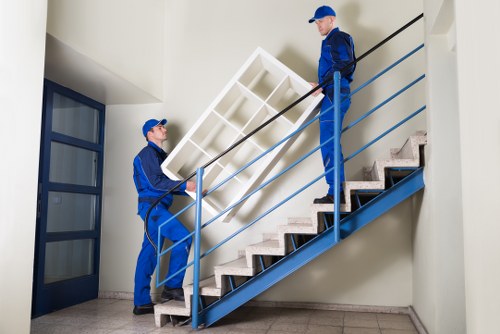
Commercial property types in the area can include older converted buildings, shared workspaces, modern office suites, and ground-floor premises with limited access. These buildings often need different moving strategies. A narrow staircase, a small lift, restricted loading bay, or shared entrance can all affect how items are removed and delivered. That is why an experienced team takes the time to think ahead instead of treating every move as identical.
Another practical advantage of using a local service is flexibility. If your move changes slightly due to tenancy issues, building access updates, or staff availability, it is far easier to adjust with a nearby team that already understands the area and can respond in a practical way.
What Affects Commercial Moving Costs
Many businesses want to know how pricing works before they request a quote. While exact figures are not listed here, commercial moving costs are usually influenced by a combination of practical factors. Understanding them helps you compare services fairly and plan your budget more accurately.
Typical pricing factors may include:
- The size of the move and number of items
- Distance between the old and new premises
- Access conditions at both locations
- Parking or loading constraints
- Whether furniture dismantling is required
- How much packing support you want
- Whether the move needs to happen outside normal hours
- The presence of fragile, bulky, or specialist items
If your business is moving from one commercial unit to another within Newbury Park or the surrounding area, the overall journey may be short, but access and handling can still influence the job. For example, a short distance does not necessarily mean a simple move if the building is difficult to load, has upper-floor offices, or requires multiple trips.
When you request a quote, the most helpful approach is to give as much detail as possible. The clearer the information, the more accurate and realistic the plan can be. This also helps you avoid delays or extra arrangements later on.
How to keep your move efficient and cost-aware
You can often help keep the project efficient by:
- Reducing clutter before the move
- Sorting out unwanted items in advance
- Labeling everything clearly
- Confirming access arrangements early
- Preparing staff responsibilities before moving day
Why Choose a Local Company for a Newbury Park Business Move
There are practical reasons businesses often prefer a local team for commercial relocation projects. A company that regularly works in and around Newbury Park is more likely to understand the pace of the area, the range of property types, and the kinds of obstacles that can affect commercial removals. That means less guesswork and a more realistic move plan.
Local service benefits can include:
- Better awareness of access routes and parking limitations
- Quicker response times for planning and scheduling
- More practical advice on timing and loading
- Useful experience with mixed residential and commercial streets
- Greater flexibility if the move needs to be adjusted
For many customers, the value of a local commercial mover is not just transport. It is the confidence that the team understands how to work around real premises, busy roads, and business deadlines. That can be especially helpful for companies with limited internal support or tight relocation windows.
Local familiarity also helps reduce wasted time on the day. If the crew knows how loading typically works in the area, they can arrive prepared with the right plan, which makes a noticeable difference when the clock is ticking and staff need to get back to work.
Residential and commercial overlap in the area
Newbury Park includes streets where business premises sit near homes, shared buildings, or mixed-use areas. In those situations, courtesy and efficiency matter. A local team is more likely to work considerately around neighbours, shared access points, and limited curb space, which helps keep the move smooth for everyone involved.
Areas Covered Around Newbury Park
Commercial clients often need a removals team that can support not only Newbury Park itself, but also the surrounding places where offices, shops, and workspaces are located. Depending on the job, service may extend into nearby parts of East London and neighbouring districts where business relocation needs are similar.
Examples of nearby areas and local surroundings that may be relevant include:
- Ilford
- Gants Hill
- Barking
- Seven Kings
- Goodmayes
- Redbridge
- Woodford
- Romford
If your business is moving between Newbury Park and a nearby district, or relocating from one commercial property to another across the local area, a flexible team can help coordinate the process. This is useful for companies that may be changing their footprint while keeping travel times manageable for staff and customers.
Not every move is identical. Some are short local relocations, while others involve larger moves across multiple buildings or departments. The important thing is to work with a service that can adapt to your scale, timing, and access conditions.
Examples of local business properties that may need moving support
- Ground-floor offices with frontage access
- Upper-floor suites in mixed-use buildings
- Retail spaces with stockrooms
- Consulting rooms and professional practices
- Storage-led commercial units
Frequently Asked Questions
How far in advance should I book a commercial move?
It is best to arrange your move as early as possible, especially if you need a specific date, weekend work, or out-of-hours support. Early planning gives you more flexibility and helps with access arrangements, internal packing, and staff preparation.
Can commercial moves be done outside working hours?
In many cases, yes. Some businesses prefer evenings, weekends, or early mornings to reduce disruption. Availability may depend on the scale of the move and the building access rules at both locations.
Do I need to pack everything myself?
Not always. Some businesses prefer to pack internally, while others want help with packing materials, labelling, or selected items. The right option depends on your schedule, the type of equipment being moved, and how much support you want.
Can you move office furniture and IT equipment?
Yes, office furniture and IT-related items are commonly part of commercial relocations. Sensitive equipment should be flagged in advance so it can be handled appropriately and moved with care.
What if my premises has limited parking or awkward access?
This is very common in commercial moves, particularly in built-up areas and mixed-use streets. A local team can plan around parking restrictions, access points, and loading conditions to make the job more efficient.
How do I prepare staff for the move?
Give everyone clear instructions on what to pack, what to label, and where to place personal items. If possible, assign move-related responsibilities by department so the process stays organised.
Can you handle a small office move as well as a larger one?
Yes. Smaller office moves often benefit just as much from professional support because they still involve careful timing, packing, transport, and setup. The size of the move does not change the need for organisation.
What Makes a Move Go More Smoothly
Even with the right removals team, a successful business relocation also depends on the preparation and communication inside your company. The smoothest moves are usually the ones where everyone knows the plan and the moving team has all the practical details in advance.
Helpful habits for a smoother move include:
- Assigning one person to coordinate with the removal team
- Keeping a simple inventory of what is moving
- Separating essential items from non-essential items
- Making sure keys and access details are ready
- Keeping hallways and exit routes clear
- Checking the new site before move day if possible
For larger offices, it can help to move in phases. For example, filing, surplus furniture, or storage items may move first, followed by desks, equipment, and final workspace items. This kind of phased approach can make the transition less stressful and easier to manage.
Good communication is just as important as physical lifting. When the removal crew knows the sequence of items, the layout of the destination, and any time-sensitive restrictions, they can work more efficiently and with fewer interruptions.
Making the destination easier to settle into
Before move day, think about how the new premises should function once everything arrives. Decide where desks, filing units, stock, or key equipment should go. This simple step can save time during unloading and help your team return to normal operations more quickly.
Requesting a Quote for Commercial Moves in Newbury Park
If your business is preparing for a relocation, internal move, or office changeover, the easiest next step is to request a quote with as much detail as possible. That allows the service provider to understand your requirements, assess the likely workload, and give you a practical plan. Whether you are moving a small team or a larger commercial operation, clear information helps everyone.
When you enquire about Commercial Moves in Newbury Park, it helps to include:
- Your current and new premises type
- The preferred moving date or date range
- Approximate number of items or workstations
- Whether packing support is needed
- Any stairs, lifts, or narrow access points
- Parking or loading restrictions
- Items requiring special handling
A well-planned commercial move is an investment in business continuity. It can reduce downtime, protect your equipment, and make the transition less stressful for your staff. If your company is planning a move in Newbury Park or nearby, now is the right time to start arranging the details.
Contact us today to discuss your move requirements, or book your service now if you are ready to secure a date and get the process underway. A careful, local approach can make all the difference when your business needs to move without unnecessary disruption.